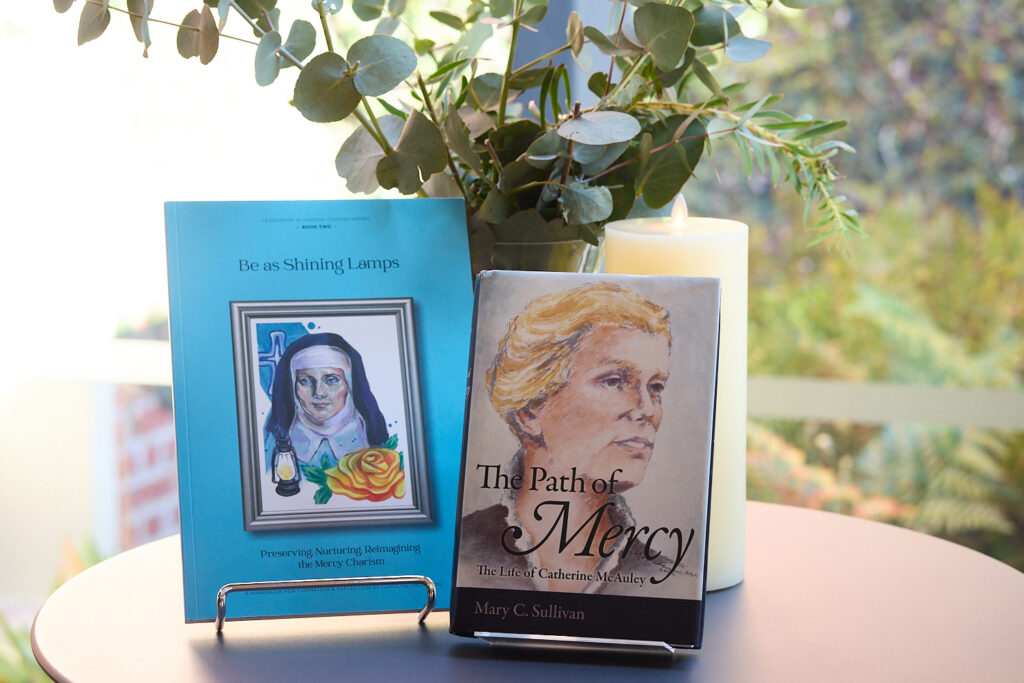
We continue our project snapshots with a focus on Pip McIlroy’s project ‘Leading Reflection and Prayer in Meetings.’ Pip is Group Director, Mission and Pastoral Care, at Mercy Health. Pip developed and trialled a guide for managers which included some suggested processes and resources for leading prayer and reflection – the What, Why and How.
What and why
Mercy Health’s Mission sits at the heart of everything we do. Formation – understood as the activity of drawing our community more deeply into an ownership of that Mission – is an essential part of the continuation of our Mission.
Formation happens in many forms, both planned and unplanned. One common form is that of reflections in group settings.
Our story sits within a broader story of Catholic Christianity. So, our ritual of reflection is very much informed by our heritage in the tradition of the Sisters of Mercy and our identity as a Catholic healthcare provider.
Reflections are a simple way to pause and call those gathered to be fully present. In this way, it is an opportunity to grow in our awareness and understanding of the story on which our service was founded, so as to be grounded in it and the values that guide our care.
Part of our Mercy Health culture is to develop reflective practices in our teams. Reflective practice helps us to make a habit of reviewing our actions and outcomes. Sometimes it’s a moment to gather our thoughts and refocus.
Reflections promote deeper thinking and engagement and at their best, they serve as a bridge between your team members and our shared Mission at Mercy Health. When we build this ritual into our work schedules, it helps to ensure our shared vision ‘shows up’ in the way we interact with one another and serve our community.
How
You don’t need to spend a large amount of time preparing your reflection, but it’s important to put some focused thought into it, so that it is meaningful for you and others.
It’s a good idea to honour the importance of this aspect of meeting preparation like you would the other items on the agenda.
If you would like some help or coaching, contact someone in the Mission/Formation team.
When the day for you to lead the reflection comes, be sure to prepare yourself by taking a moment to remind yourself of the purpose for reflection and the importance of being centred and focused so that the reflection is as meaningful as possible.
The remainder of the document details 6 key elements of a meeting reflection. These are shared as a resource, not as a requirement for uniformity.
As Pip is currently on parental leave, for further information about this resource, contact Luke Tobin at TobinL@mercy.com.au